
Compost Versus Soil Amendments for Utah Jobs
A thin layer of material spread over hard Utah ground can look like a finished landscape. It is not. The practical question in compost versus soil amendments is whether the material will change the root zone enough to hold water, support roots, and carry the site through summer heat. For commercial crews, property managers, and large-lot owners, that difference shows up later as better color, fewer dry spots, and fewer spring callbacks.
Compost and soil amendments are not competing products in the usual sense. Compost is one of the most useful soil amendments. But not every amendment does the same job, and no single material fixes every problem. Start with the soil condition, the planting plan, and the depth crews can realistically incorporate before freeze-up or spring installation.
Compost Versus Soil Amendments: The Simple Difference
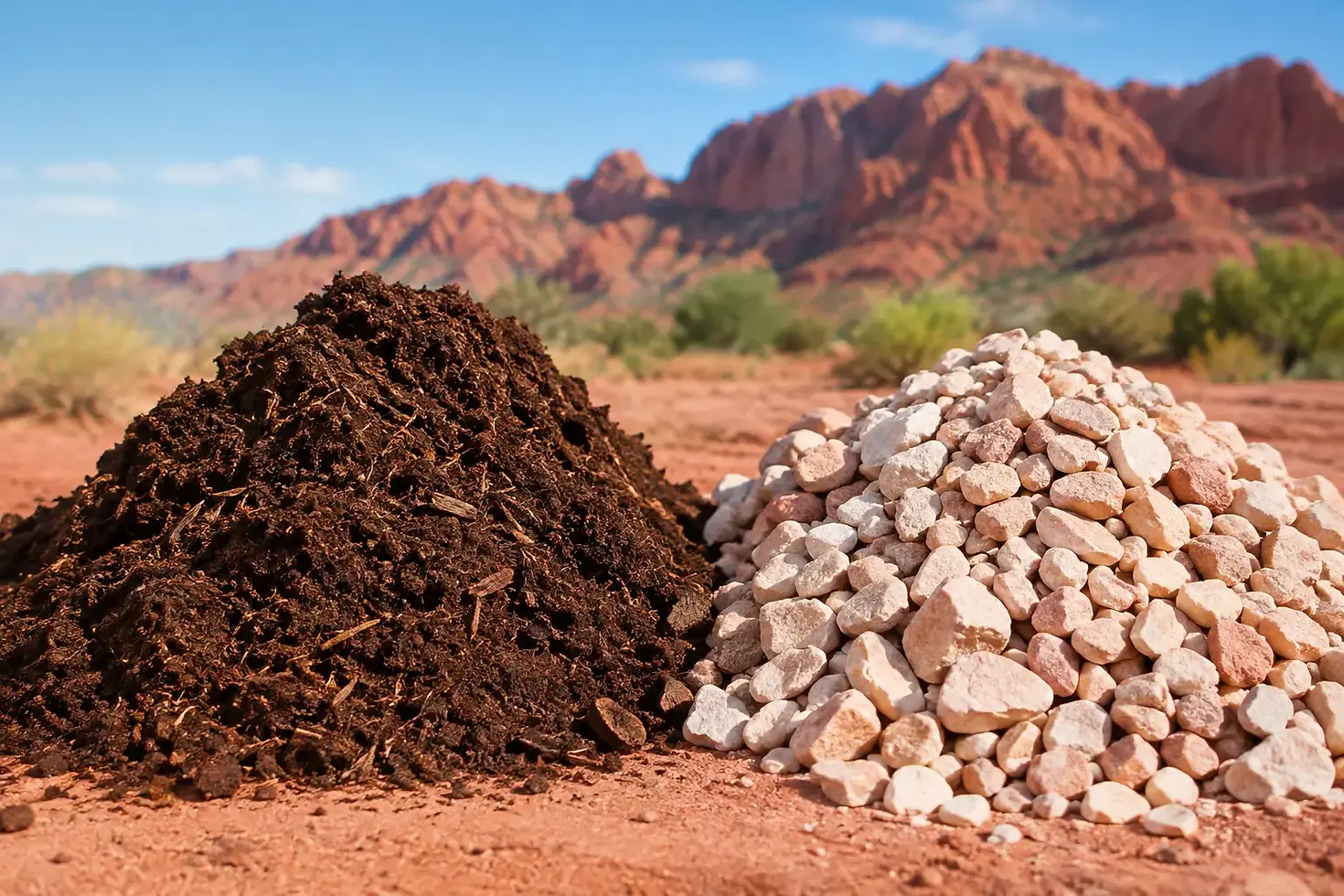
Compost is decomposed organic material. Fine wood compost adds stable organic matter to mineral soil. Its main work is broad and physical: it improves soil structure, helps the root zone hold moisture, reduces crusting, and supports the biological activity that helps plants use nutrients.
A soil amendment is the larger category. It includes compost, but also materials chosen for a specific soil need. Iron-rich amendments such as Ferrozite can address iron availability. Screened topsoil can improve grade and create a better planting layer. Wood organics, mineral blends, and other inputs can change texture, nutrient supply, or moisture behavior.
Think of compost as the foundation material for most landscape soil. Targeted amendments are the correction materials. A parking-lot island with compacted, pale soil may need both. Compost builds a more workable root zone. An iron-rich amendment may help plants that need more available iron. Adding only one material when the site needs both can leave the job half finished.
What Compost Does Best
Fine wood compost is a practical first choice when native soil is tight, low in organic matter, difficult to wet, or quick to dry after irrigation. Those conditions are common on new construction sites, where topsoil may be thin, scraped, or mixed with subsoil during grading.
Compost creates space between soil particles. That space matters. In clay-heavy ground, it helps water enter rather than run off or pond at the surface. In sandy ground, it gives water and nutrients more places to stay instead of moving quickly below active roots. Neither result means compost eliminates the need for proper irrigation. It means the irrigation work has a better chance of reaching and staying in the root zone.
It also improves installation conditions. Beds amended before planting are easier to dig and less likely to seal over after rain or irrigation. Sod and seed establish more reliably when the soil below them is not compacted and starved of organic matter. Trees and shrubs get a better transition from nursery soil to site soil when the surrounding planting area is improved, not just the hole.
For most lawn areas, planting beds, and tree zones, spread compost at about 1 to 2 inches deep and incorporate it into the top 4 to 6 inches of soil where access and site conditions allow. One inch over 1,000 square feet is about 3 cubic yards of material. Two inches over the same area is about 6 cubic yards. Measure the area before ordering so the crew is not short halfway through the spread.
When a Targeted Amendment Earns Its Place
Compost improves many soils, but it is not a cure for every issue. If the project needs a specific correction, use an amendment selected for that correction.
Iron is a common example in Utah landscapes. High-pH soils can make iron harder for plants to use, even when iron exists in the ground. Yellowing between leaf veins, especially on certain ornamentals, can point to an iron availability issue. An iron-rich material such as Ferrozite is designed to supplement the root zone while compost supports moisture and soil biology around it.
Topsoil is another example. It is often confused with compost, but the two do different work. Screened or enhanced topsoil is used to build grade, fill low areas, establish a planting layer, and prepare a surface for sod or seed. Compost should be blended into that soil to improve its performance. Using compost alone to raise a large grade is usually not the right material choice or the most economical one.
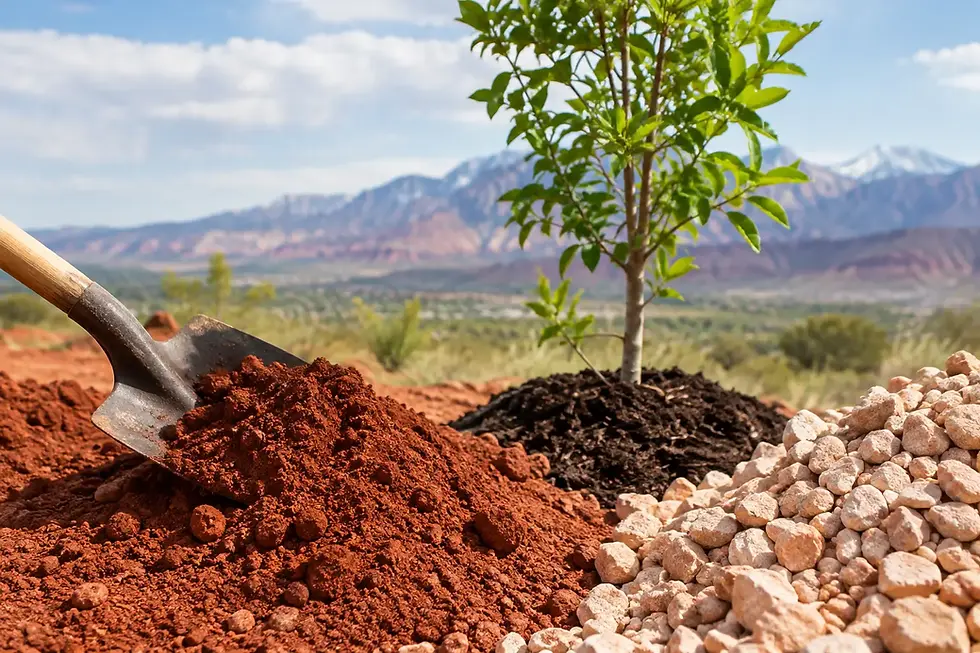
Wood chips and mulch belong in the plan too, but they are surface materials, not substitutes for incorporated compost. A 2 to 4 inch mulch layer around trees, shrubs, and beds moderates soil temperature and slows surface moisture loss. Keep it off trunks and crowns. Let compost improve the soil below, then use mulch to protect the work above.
Winter Is a Good Time to Fix the Root Zone
Winter soil work is not glamorous, but it often prevents spring failure. When plants are dormant and crews have site access, compost can be spread and incorporated ahead of new turf, bed renovation, and spring planting. The material has time to settle into the soil profile instead of becoming an afterthought on a crowded installation schedule.
The timing depends on ground conditions. Do not work saturated soil or frozen ground that cannot be mixed properly. Compaction caused by running equipment over wet soil can cancel out some of the improvement you are trying to make. But during workable weather windows, fall and winter are strong seasons for soil preparation in Utah.
For an existing lawn that cannot be tilled, a lighter compost topdressing can still help. Apply roughly one-quarter to one-half inch after aeration, then drag or rake it so grass blades are not buried. This is a maintenance approach, not the same as rebuilding compacted construction soil. For a new install or major renovation, incorporation to depth produces a more meaningful change.
Match the Material to the Job, Not the Label
A good material plan starts with the jobsite questions crews actually face. Is the goal to improve poor native soil, build grade, correct a nutrient issue, establish turf, or protect new plants through winter? Is the site a broad lawn, a small tree well, a sports field edge, or a series of high-visibility entry beds?
For a new commercial landscape, a common approach is to place screened or enhanced topsoil where grade needs to be built, blend in 1 to 2 inches of fine wood compost, and add a targeted amendment where site conditions or plant requirements call for one. Then install turf, plants, and a protective mulch layer in beds. Each material has a job, which makes ordering and installation easier to manage.
For established beds with tired soil, compost may be the main need. Work it into open areas without damaging roots, then renew mulch. For visibly chlorotic plant material or sites with known iron issues, pair compost with an iron-rich amendment rather than assuming organic matter alone will solve the problem.
Avoid applying amendments by habit. More material is not always better. Excessive compost can create overly rich conditions, alter drainage, or add nutrients that a site does not need. A modest, well-incorporated application is more useful than a deep layer left sitting on the surface.
Plan Bulk Delivery Before the Crew Arrives
Bulk material makes sense when the project calls for yards, not bags. It also requires a delivery plan. Confirm the product, quantity, access route, and a level dump location before the truck is dispatched. Compost, topsoil, aggregate, and mulch are separate materials, so plan separate loads when the job requires more than one.
For contractors, the best time to order is before the crew is standing by. Check gate widths, overhead clearance, turning space, and whether the dump spot will block other trades or tenant access. A clear placement plan saves loader time, wheelbarrow trips, and schedule pressure.
SuperSoil USA supplies fine wood compost, Ferrozite-enhanced Super Soil, screened soil products, mulch, and bulk materials for Utah jobsites. To talk through quantities, product fit, or delivery access, call 435-896-5970.
Fix the root zone before the weather turns and before spring schedules get crowded. Compost first where the soil needs rebuilding, then use the right amendment for the condition in front of you. The landscape above ground will have a better chance to hold its color, water, and shape when the ground below is prepared to do its job.


Comments