
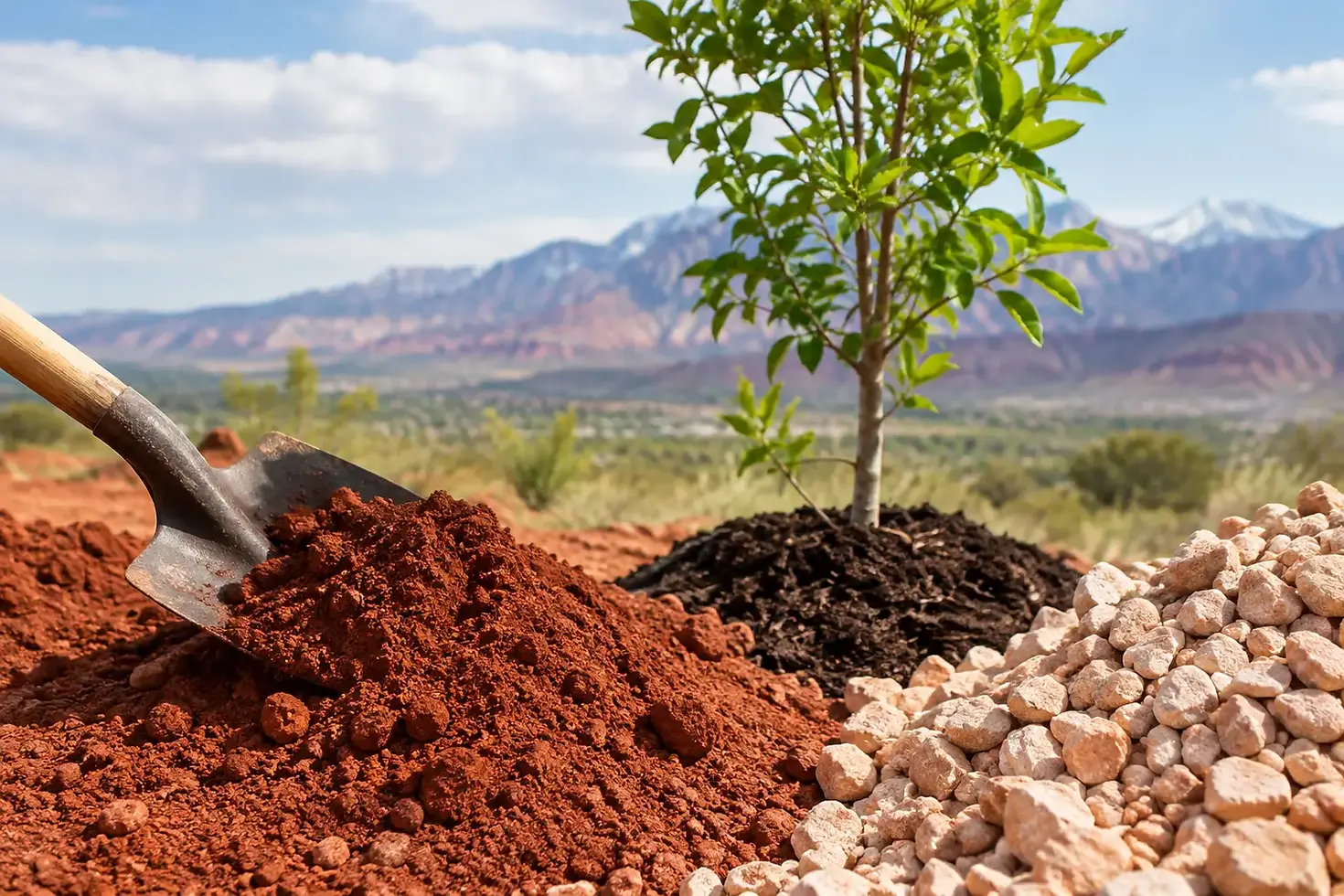
Compost for Tree Planting Guide for Utah Sites
A newly planted tree can look fine at turnover, then struggle when Utah heat, wind, and irrigation demands arrive. This compost for tree planting guide focuses on the work that happens before the tree goes in: building a wider, healthier root zone that holds moisture and gives roots a reason to move beyond the planting hole.
For commercial crews, HOAs, cities, and large-lot builders, that work is best handled before freeze-up or ahead of spring planting. Compost is not a surface cosmetic. Used correctly, it improves the ground around tree wells, parking-lot islands, lawn conversions, and new landscape beds so the finished landscape has a better start.
Start With the Soil Around the Tree, Not Just the Hole
The common mistake is filling a planting hole with rich compost or heavily amended soil while leaving hard native ground around it. That can create a soft pocket that holds too much water or keeps roots circling where conditions feel easiest. The tree may establish slowly because roots do not move into the surrounding soil.
A better approach is to improve a broad planting zone. Spread compost across the bed, island, or tree area first, then incorporate it into the upper soil layer where practical. The goal is a gradual transition from amended soil to native soil, not a container buried in the ground.
For a single tree in an open landscape, prepare an area at least two to three times wider than the root ball when the site allows. In formal tree wells and narrow islands, amend the entire available soil area rather than concentrating material at the trunk. This gives new feeder roots a more consistent place to grow.
How Much Compost to Use for Tree Planting
For most new tree planting areas, spread 1 to 2 inches of [fine wood compost](https://www.supersoilusa.com/fine-wood-compost) over the full root-zone area and incorporate it 4 to 6 inches deep before planting. One inch of material over 1,000 square feet requires about 3 cubic yards. Two inches requires about 6 cubic yards.
The right rate depends on the site. Use the lighter 1-inch rate where soil already has reasonable structure, organic matter, and drainage. Move toward 2 inches for compacted construction soil, stripped lots, sandy ground that dries too quickly, or depleted planting islands that have been repeatedly replanted.
Do not assume more is always better. Excessive compost can make a soil mix too loose, can change drainage behavior, and may contribute more nutrients than a young tree needs. Fine wood compost is useful because it adds stable organic matter and improves soil texture without turning the tree zone into a high-fertility planting mix.
If a project calls for topsoil import, compost can be blended into the topsoil before placement or incorporated after spreading. The key is even distribution. A few heavy piles mixed unevenly across a bed will show up later as uneven settling, variable moisture, and inconsistent plant performance.
What to Put Back in the Planting Hole
Dig the hole two to three times as wide as the root ball, but no deeper than the root ball itself. The root flare should finish at or slightly above surrounding grade. Planting too deep causes more trouble than a modest amount of compost ever solves.
Backfill mainly with the site soil that came out of the hole. If the entire surrounding area has been amended with compost, that blended soil can go back into the hole as well. Avoid making a sharply different backfill mix in only one hole.
Break up large clods, remove construction debris, and firm soil lightly as you backfill. Do not pack it hard. Water after planting to settle the soil naturally, then check the root flare again before mulch goes down.
Why Compost Matters on Utah Tree Sites
Utah landscape soils often present two opposite problems: dense, compacted ground that sheds water and sandy or low-organic soils that lose water too fast. Both can leave a new tree dependent on frequent irrigation. Compost helps moderate those conditions.
In heavier soils, organic matter supports better aggregation. Soil is less likely to stay as hard, tight plates around the root zone. In lighter soils, compost improves water-holding capacity so irrigation stays available longer between cycles. That does not eliminate the need for a proper irrigation schedule, but it makes each watering more useful.
Compost also supports the biology that helps roots function. Trees do not need a complicated soil-science lecture. They need oxygen, water, stable soil structure, and a living root zone. A clean, low-salt compost gives crews a practical way to improve all four without relying on a quick-fix fertilizer program.
For sites with known iron availability issues or chlorosis history, Ferrozite may be part of the broader soil plan. Use it where the soil condition and plant requirements justify it, ideally with a soil test or clear site history. Compost improves the growing environment; iron amendments address a different need. One does not replace the other.
Winter Is a Working Season for Tree Soil
Dormant-season soil preparation gives crews time to rebuild planting areas before spring schedules tighten. When access is available and soil is workable, spread compost, incorporate it, rough-grade the site, and let winter moisture help settle the area. This is especially useful on commercial properties where tree planting, sod, beds, and irrigation work all compete for spring labor.
There are limits. Do not till or drive heavy equipment through saturated soil. Working wet ground can create compaction and smearing that undo the benefits of the compost. Hold material until the soil can be handled without forming slick, dense clumps.
For winter tree protection, keep mulch and wood chips available after planting. Spread 2 to 4 inches over the tree zone, but keep mulch several inches away from the trunk. A mulch volcano traps moisture against bark and invites problems. The right mulch ring reduces evaporation, moderates soil temperature, and keeps mower damage away from young trunks.
Plan Delivery Before the Crew Is Standing Around
Bulk material saves time only when the jobsite has a clear dump plan. Confirm access width, overhead clearance, gate locations, ground conditions, and the exact dump spot before the truck is dispatched. Keep compost away from storm drains and place it where loaders, skid steers, or wheelbarrows can reach it without crossing finished work.
Measure the treatment area before ordering. Square footage multiplied by the planned depth gives a better starting point than guessing by the number of trees. A project with 40 trees may need very little compost if the wells are small, while a few large parking-lot islands can require several yards.
SuperSoil USA supplies fine wood compost, Super Soil blends, enhanced topsoil, Ferrozite, mulch, and other bulk materials for Utah jobsites. Products are delivered separately, so plan staging space if the scope includes compost, topsoil, mulch, and aggregate work in the same phase. For material guidance, delivery planning, or an order, call 435-896-5970.
A Simple Field Check Before You Close the Job
Before the crew leaves, look for the details that prevent callbacks. Root flares should be visible. Tree wells should drain without becoming deep basins. Compost should be incorporated through the surrounding root zone, not piled against the trunk. Mulch should be even and pulled back from bark. Irrigation should wet the root ball and the soil beyond it.
Then set expectations for the first growing season. Compost improves the soil, but it does not make a new tree maintenance-free. Deep, appropriate irrigation and regular inspection still matter while roots establish. Build the soil correctly now, and the tree has a better chance of holding color, handling summer stress, and becoming an asset instead of a replacement item on next year's punch list.


Comments