.png)
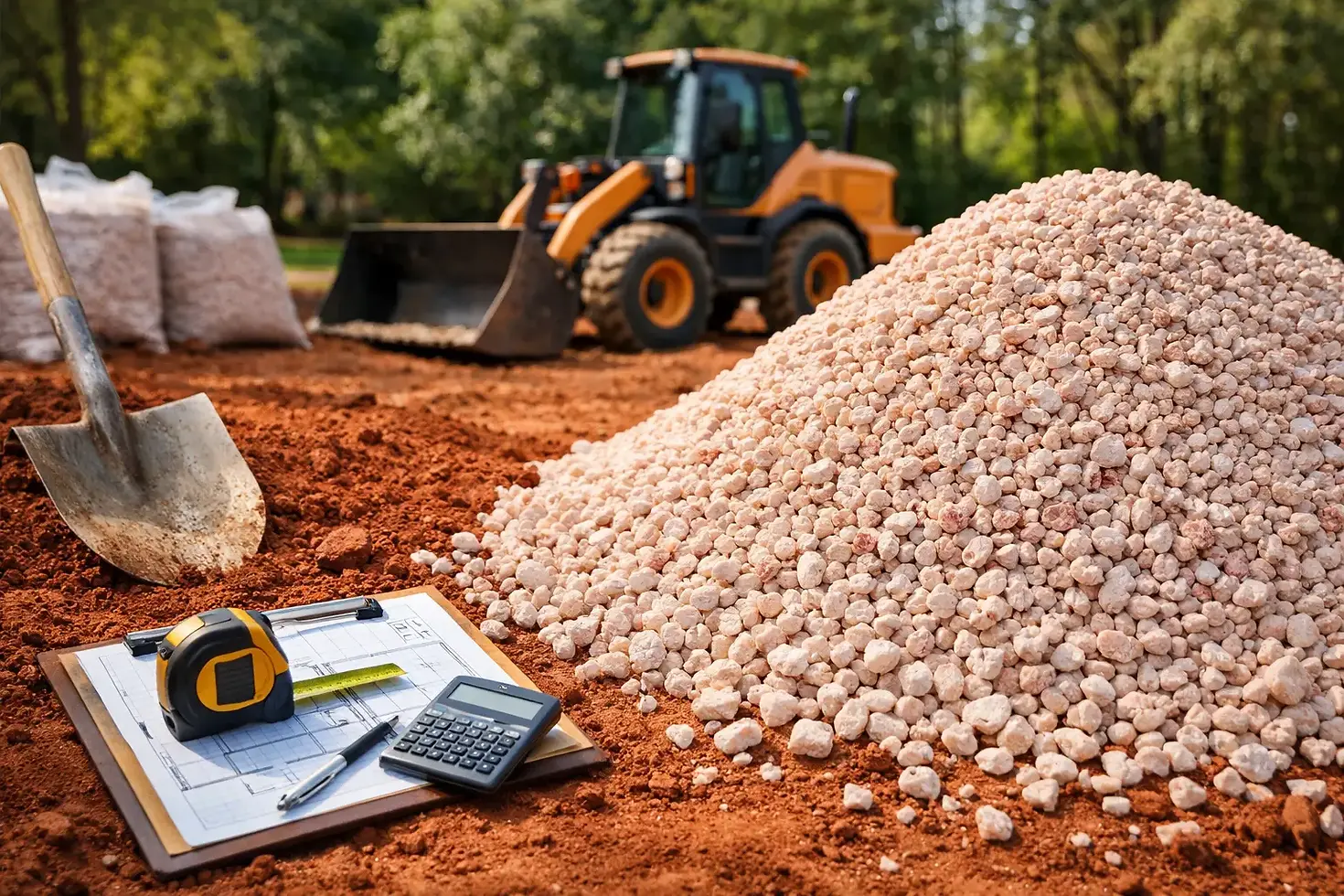
How Much Gravel Do I Need for My Project?
A gravel project can look simple until it is time to order. Buy too little, and the job stops while you wait for another load. Buy too much, and you are left finding a use for an extra pile. If you are asking, “how much gravel do I need,” the answer comes down to three practical details: the area you are covering, the finished depth you need, and the type of material you choose.
For Utah driveways, walkways, parking areas, and decorative beds, those details matter. Gravel that works well as a compacted driveway surface is not measured or installed the same way as decorative rock around shrubs. A few minutes of measuring before delivery helps you get the coverage, appearance, and durability you expect.
How Much Gravel Do I Need? Start With Area and Depth
First, measure the length and width of the space in feet. For a rectangle or square, multiply those numbers to get square footage.
Length x width = square feet
A 20-foot-long driveway section that is 12 feet wide covers 240 square feet. A 10-by-15-foot landscape bed covers 150 square feet. Write down each section separately if the project has different areas, then add them together.
Next, decide how deep the gravel needs to be. Depth is where many orders go wrong. A thin layer may look adequate on the day it is installed, but it can shift, expose fabric, collect weeds, or disappear into soft ground after a season of use.
For decorative landscape rock, a finished depth of 2 to 3 inches is common. Two inches can work for a tidy bed with stable ground and limited foot traffic. Three inches usually provides better color coverage and a fuller finish, especially where existing soil is dark or uneven.
Walkways generally need 3 to 4 inches of compacted gravel, depending on the material and how heavily the path is used. Driveways and parking areas need more support. A finished gravel surface may be 3 to 4 inches deep, but it often performs best over a properly prepared, compacted road base layer. Dirt-road repairs and areas that see trucks, trailers, snow removal, or regular traffic may require additional base material.
Convert Your Measurements Into Cubic Yards
Bulk gravel is usually sold by the cubic yard. One cubic yard equals 27 cubic feet, so the goal is to convert your project’s square footage and depth into cubic feet, then divide by 27.
Use this formula:
Length x width x depth in feet ÷ 27 = cubic yards
Because depth is often measured in inches, divide the depth by 12 first. For example, 3 inches is 0.25 feet. A 150-square-foot landscape bed at 3 inches deep would be calculated like this:
150 x 0.25 ÷ 27 = 1.39 cubic yards
In real-world ordering, it is wise to round up. For that bed, ordering 1.5 cubic yards gives you a little room for uneven ground, settling, and clean edges. If the ground has low spots or the bed is irregular, round up more generously.
Here is another example for a 20-by-12-foot driveway section receiving 4 inches of gravel:
20 x 12 x 0.333 ÷ 27 = 2.96 cubic yards
That project calls for about 3 cubic yards of material at the finished depth. If you are building a new driveway rather than refreshing an existing surface, calculate the base layer and top layer separately. The total can be substantially higher than the top layer alone.
A Quick Coverage Reference
If you know your square footage but do not want to work through the full formula, these estimates help. One cubic yard of gravel typically covers about 162 square feet at 2 inches deep, 108 square feet at 3 inches deep, and 81 square feet at 4 inches deep.
These are planning numbers, not a substitute for measuring. Rock size, compaction, grade changes, and the condition of the site can all affect the final amount. A sloped area, for example, often needs a little extra material at the lower edge to maintain an even visible depth.
For round beds, measure from one side straight across the center to find the diameter. Divide that measurement by two to get the radius. Then multiply radius x radius x 3.14 to find square footage. A 12-foot-diameter circular bed has a radius of 6 feet, so it covers about 113 square feet. At 3 inches deep, it needs just over 1 cubic yard of decorative rock.
Choose the Right Gravel for the Job
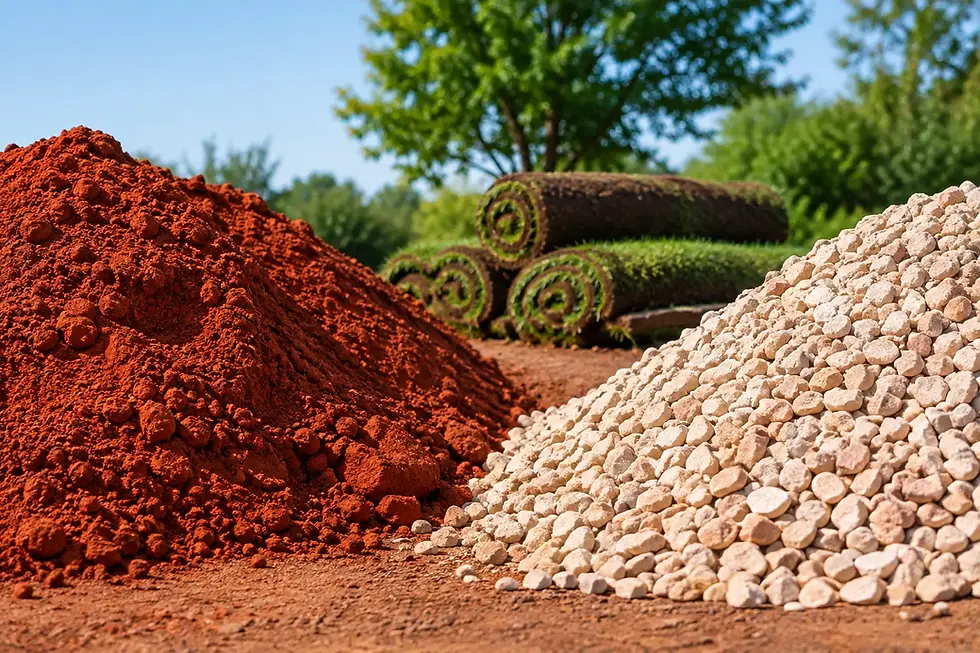
The amount of material matters, but the right material matters just as much. Decorative rock is selected for color, texture, and a finished appearance. It is a strong choice for flower beds, borders, around trees, and low-maintenance landscape areas. Strawberry Cream decorative rock, for example, can add warm natural color while helping create a clean, defined bed.
Road base and 1-inch-minus gravel are more functional choices. These materials include a range of particle sizes that help them compact into a firm surface. They are commonly used beneath driveways, patios, and walkways, or for repairing roads with ruts, potholes, and mud-prone areas. Larger clean rock drains well but does not compact in the same way, so it is not always the best top surface for vehicles or foot traffic.
Think about how the area will be used before choosing a size. Bare feet, lawn equipment, cars, trailers, drainage, snowplows, and wheelbarrows all change what works best. A decorative bed can prioritize appearance. A driveway needs a material that holds up to traffic and weather.
Account for Compaction, Existing Ground, and Waste
Do not order to the exact decimal unless your site is perfectly level and your depth requirement is flexible. Most projects benefit from adding 5% to 10% for settlement, spreading, and small measuring errors. For a 3-yard order, that may mean rounding to 3.5 yards. For a large contractor job, calculate each area carefully and confirm the material weight and delivery capacity before placing the order.
Compaction is particularly relevant for road base. When it is watered and compacted, fine material settles into voids and the surface becomes tighter. If you need 4 inches after compaction, plan for enough material to achieve that finished depth rather than spreading a thin layer and hoping it settles correctly.
Existing conditions also deserve an honest look. Gravel installed over soft, muddy soil may sink or migrate without proper preparation. Removing organic topsoil, correcting drainage, shaping the grade, and installing an appropriate base can make the difference between a driveway that lasts and one that needs repeated patching. Landscape fabric can help separate decorative rock from soil in some beds, but it does not replace proper base preparation in a traffic area.
Measure Delivery Access Before You Order
Material quantity is only half of a successful order. Make sure the delivery truck has a clear route to the drop location. Check gates, overhead branches, power lines, parked vehicles, soft ground, and narrow lanes. A load of gravel is much easier to spread when it is placed close to the project, but the delivery area must be safe and accessible for the truck.
If the material needs to be placed on a driveway, ask whether the surface can handle the truck’s weight. New concrete, soft asphalt, wet lawns, and septic areas are not good unloading locations. It also helps to plan where separate materials will go if you are ordering both road base and decorative rock.
For projects with several sections, sketch the layout and label each measurement. This simple step helps prevent double-counting and gives you a clear way to discuss your needs when ordering. If you are unsure whether a product should be used as base, top dressing, or both, bring your measurements and intended depth to the conversation.
Get Enough Gravel to Finish Strong
A clean gravel installation begins with accurate measurements, but it finishes with enough depth and the right material for the work. Do not let a small shortage leave a driveway thin in the tire tracks or a landscape bed showing bare soil along the edges. Calculate your cubic yards, round up for real-site conditions, and choose a material designed for the job.
For help confirming quantities, selecting gravel or road base, and arranging dependable delivery in Utah and surrounding states, call SuperSoil USA at 435-896-5970. A quick measurement check before the truck arrives can save time, extra handling, and a second delivery later.


Comments