.png)
Landscape Rock for Flower Beds That Last
A flower bed can look finished in an afternoon, then look tired a season later if the wrong material goes on top. In Utah, landscape rock for flower beds needs to handle intense sun, wind, spring runoff, and the occasional surprise weed without washing away or fading into the background. The right rock does more than add color. It creates a clean edge around your home, helps manage moisture, and gives your plants room to stand out.
For homeowners and contractors, the best choice usually comes down to three things: the look you want, the size of the bed, and how much maintenance you are willing to do. Rock is a long-lasting finish, but it still needs a solid plan underneath it.
Why Use Landscape Rock for Flower Beds?
Decorative rock is one of the most practical ways to finish a planting area. Unlike bark mulch, it does not break down each year or blow across the yard after a windy afternoon. It also helps protect bare soil from direct sun, which can reduce surface drying and keep beds looking more consistent between watering days.
Rock is especially useful around foundations, mailbox beds, walkways, and areas where drip irrigation is already in place. It provides a crisp, durable appearance while keeping mud from splashing onto siding and hardscape during rain or snowmelt.
That said, rock is not the right answer for every planting bed. Perennials and shrubs can do well with rock when the soil is prepared correctly and irrigation reaches the root zone. Annual beds and vegetable gardens often benefit more from compost-rich soil and organic mulch because those spaces are replanted, amended, and worked more often. It depends on how you use the bed, not just how you want it to look.
Choose Rock Size Before You Choose Color
Color catches the eye first, but size determines how the material performs. Small rock can create a tidy, refined surface around low-growing flowers and compact shrubs. Larger decorative rock has a stronger visual presence and is often better suited to broad foundation beds, slope areas, and landscapes where wind or runoff can move lighter material.
Very fine material can compact over time, collect windblown soil, and make weeding more difficult. Oversized rock can make a small bed look heavy and may leave awkward gaps around plants. For most residential flower beds, a decorative rock size that is easy to rake and walk around is a practical middle ground.
Consider the scale of the entire property. A small front entry bed generally looks better with a smaller, more uniform stone. A large rural property, long driveway border, or commercial planting area can carry a larger rock without looking crowded. Matching the rock size to the bed size is one of the simplest ways to get a professional-looking result.
Match the Color to the Home, Not Just the Plants
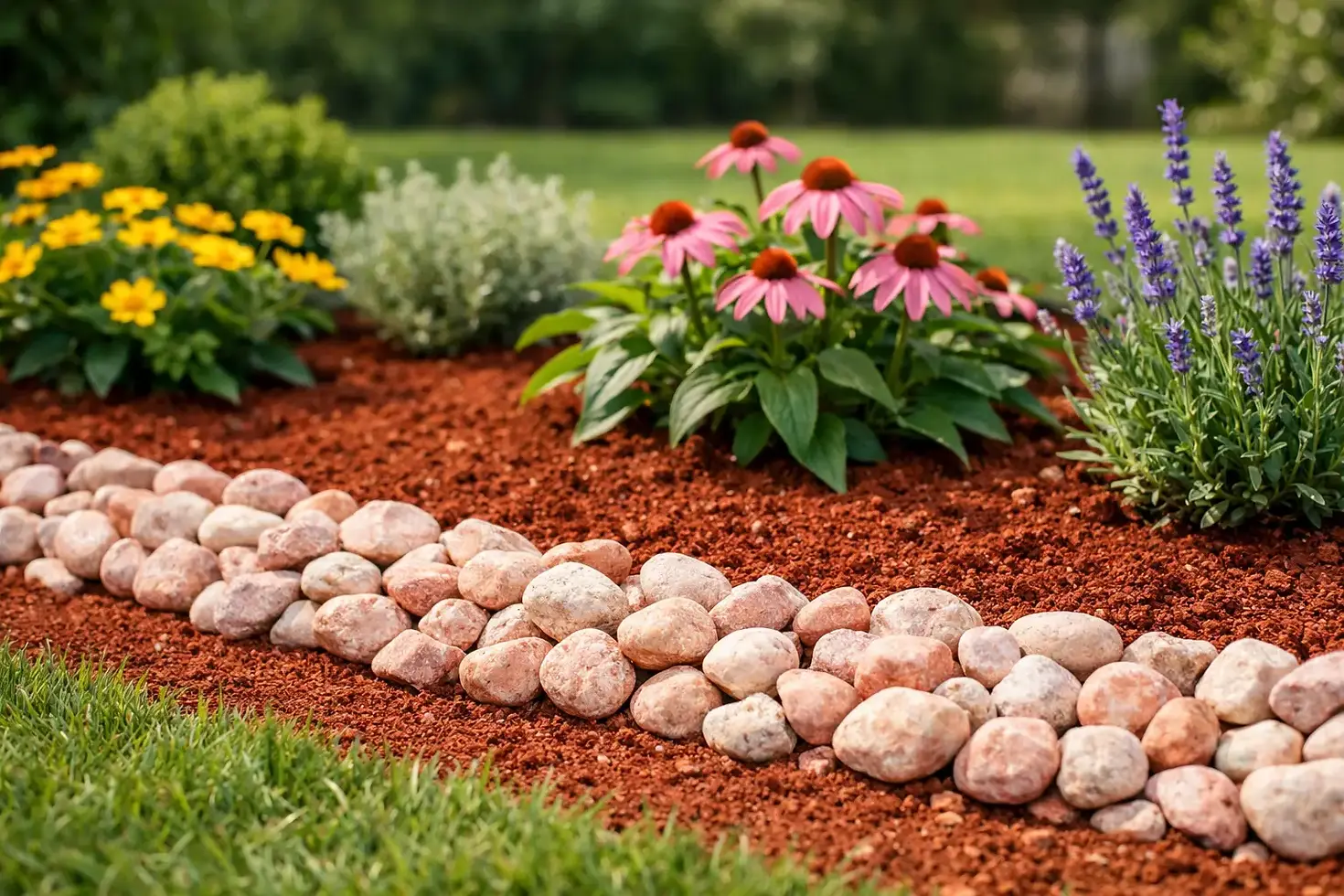
Decorative rock should support the home’s exterior, roof, hardscape, and surrounding landscape. A warm-toned rock can add contrast against gray siding or complement brick, tan stucco, and natural wood. Lighter rock can brighten a shaded entry, while deeper tones may make bright green foliage and flowering plants stand out.
Strawberry Cream decorative rock is a strong option when you want natural warmth and visible curb appeal without using a color that feels artificial. Before committing to a large quantity, look at the material in direct sunlight and next to your home. Rock can appear different when it is dry, wet, shaded, or covered by a thin layer of dust.
Prepare the Bed So the Rock Stays Clean
A good rock bed starts below the surface. Decorative stone cannot correct poor drainage, compacted soil, or a flower bed filled with existing weeds. Take the time to shape the bed, improve the growing soil where plants will be installed, and establish your irrigation before spreading rock.
Start by removing established weeds, grass, construction debris, and loose roots. Define the bed edge clearly. Metal, composite, stone, or concrete edging can all work, as long as it holds the rock in place and creates a clean separation from lawn or gravel areas.
Next, address the soil around your plants. Rock sits on top, but plant roots still need healthy soil beneath it. If the ground is hard, low in organic matter, or slow to absorb water, amend the planting areas before adding rock. A quality soil blend and organic material can help flowers, shrubs, and trees establish stronger roots instead of struggling beneath an attractive surface.
SuperSoil USA’s Ferrozite-enhanced Super Soil is built for projects where better plant performance matters as much as the finished appearance. Use soil improvements where plants grow, then use decorative rock as the durable top layer that completes the bed.
Should You Use Landscape Fabric?
Landscape fabric can be helpful beneath rock in certain beds, but it is not a guaranteed weed-free solution. It is most useful in low-disturbance areas where plants are already installed and the goal is to separate rock from soil. Fabric can slow weeds and keep rock from sinking into loose soil, especially in new beds.
The trade-off is that soil and plant debris will eventually collect on top of the fabric. Weed seeds can still sprout in that surface layer. Fabric can also make future planting, dividing perennials, and irrigation repairs more time-consuming.
If you use fabric, choose a water-permeable product and avoid covering plant crowns or creating a barrier that directs water away from root zones. In beds you expect to rework often, skip the fabric and focus on proper edging, adequate rock depth, and regular maintenance instead.
How Much Rock Does a Flower Bed Need?
Most decorative flower beds need roughly 2 to 3 inches of rock depth. Two inches is often enough for a tidy bed with good edging and limited foot traffic. Three inches provides more coverage and can better hide the soil below, particularly when the rock has irregular shapes.
Too little rock leaves exposed soil, allows weeds to gain a foothold, and can make the bed look patchy after a heavy rain. Too much rock can crowd the base of plants, interfere with irrigation, and raise the finished grade too close to siding, weep holes, or door thresholds.
To estimate material, measure the bed’s length and width, then multiply to find square footage. Multiply that number by your planned depth in feet. For example, 2 inches is about 0.17 feet and 3 inches is 0.25 feet. The resulting cubic-foot measurement can be converted to cubic yards for bulk ordering. If the bed has curves, slopes, or uneven edges, allow a little extra rather than coming up short during installation.
For help selecting the right amount of decorative rock, soil, compost, or base material for the project, call 435-896-5970. A quick material conversation before delivery can prevent extra trips and a half-finished flower bed.
Install Rock Without Hurting Your Plants
Place plants first, water them in, and check the irrigation coverage before rock goes down. Once the stone is spread, moving plants becomes harder and usually creates a mess. Keep rock a few inches away from plant stems, trunks, and crowns. Piling rock against the base of a plant can trap moisture where it does not belong and make it harder for new growth to emerge.
Spread the rock evenly with a shovel and rake, working from the back of the bed toward the edge. Avoid dumping a full load directly on delicate plants or drip lines. On sloped beds, start at the lower edge and use sturdy edging or larger material where runoff is likely to move stone.
Do not let the finished rock level rise against house siding. Leave appropriate clearance around foundations and make sure water still drains away from the structure. Attractive landscaping should never create a drainage problem.
Keep Rock Beds Looking Fresh
Rock beds are lower maintenance than many mulch beds, not maintenance-free. A quick cleanup a few times each season goes a long way. Pull weeds while they are small, blow or rake leaves off the surface, and reset rock that has been kicked onto lawn edges or sidewalks.
Over time, windblown dust and decomposing leaves can create a thin layer of soil between stones. That is where many weeds begin. Removing debris early is easier than trying to restore a neglected bed several years later. If irrigation sprays directly onto the rock, adjust the heads or drip lines to reduce mineral staining and wasted water.
A well-built flower bed should look good from the street and make daily upkeep easier. Choose rock that fits the scale of the space, prepare the soil where plants need to grow, and install enough material to create real coverage. With dependable materials and a little attention each season, your flower beds can keep their clean, finished look through Utah heat, wind, and changing weather.


Comments