.png)

Gravel Supplier Richfield Utah for Lasting Projects
A washed-out driveway, a muddy gate entrance, or a flower bed that still looks unfinished after the plants go in usually comes down to one thing: the right material was never placed underneath or around it. When you need a gravel supplier Richfield Utah property owners can rely on, the goal is not simply to buy rock. It is to get the right aggregate for the job, in a quantity that makes sense, with delivery that keeps the project moving.
Gravel is one of the hardest-working materials on a Utah property. It supports driveways, provides stable access around shops and barns, manages runoff, creates clean edges, and gives finished landscapes a durable look. But “gravel” covers a lot of different products. Choosing by appearance alone can leave you with loose rock where you needed compaction, mud where you expected drainage, or a surface that shifts every time a vehicle drives over it.
Choosing a Gravel Supplier in Richfield, Utah
A dependable local supplier should help you match the material to the use, not push one product for every project. Richfield-area properties see real weather swings. Snowmelt can soften an unprepared driveway. Summer storms can move loose material and cut channels into slopes. Freeze-thaw cycles can expose weak spots that looked fine when the project was first completed.
That is why the right gravel starts with a clear question: What does this area need to do? A driveway has to carry vehicle weight. A drainage strip needs open space between particles so water can move. A decorative bed needs a finished color and texture that works with the home, plants, and surrounding landscape.
For homeowners, that may mean explaining the project in plain terms before ordering. For contractors and property managers, it often means confirming the material size, whether fines are included, how much coverage is needed, and whether trucks can access the site. Those details save time, wasted loads, and rework.
Road Base for Driveways, Access Roads, and Pads
Road base is built for strength and compaction. It commonly includes a blend of crushed aggregate sizes and fines that lock together when placed, moistened as needed, and compacted. This makes it a practical choice beneath driveways, parking areas, shed pads, and rural access routes.
If your driveway has potholes, the fix is not always to dump more loose gravel into the holes. Water and weak base material are often the real problem. Remove soft material when necessary, establish drainage, add road base in manageable lifts, and compact it properly. A quality surface layer can help with appearance, but it cannot replace a solid base underneath.
For a longer driveway, ordering in bulk is usually more practical than buying small bags. It also gives you enough material to build up low areas rather than just cover them. Measure the length and width of the area, decide on the finished depth, and account for extra material if the ground is deeply rutted or uneven.
Gravel for Drainage and Clean Utility Areas
Drainage gravel serves a different purpose. It is generally selected for its ability to allow water to pass through rather than compact into a hard surface. Used correctly, it can help around downspouts, along drainage paths, behind retaining features, and in other areas where standing water creates trouble.
The trade-off is that open gravel is not the best standalone surface for every vehicle area. It can shift under tires, especially on slopes or heavily traveled entrances. If water management and vehicle traffic both matter, the project may need layers: a stable road base below, then a selected top material or drainage plan designed for the specific site.
Gravel is also useful around outbuildings, propane tanks, trash areas, and side yards where grass is difficult to maintain. These spaces benefit from a tidy, low-maintenance surface, but preparation still matters. A well-shaped subgrade and solid edging can keep the finished area from spreading into nearby lawn or beds.
Decorative Gravel Gives a Landscape Its Finished Look
Functional material does not have to look plain. Decorative rock and gravel can create contrast around plant beds, define walkways, cover bare ground, and reduce the constant upkeep that comes with mulch in windy or exposed areas. The right color can tie together siding, fencing, masonry, and existing hardscape.
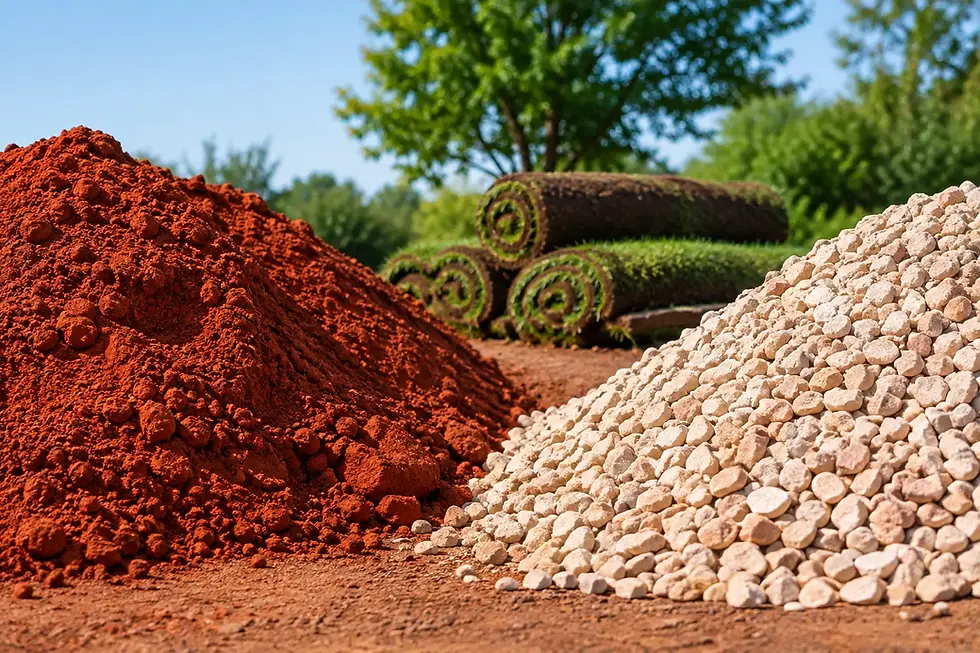
Strawberry Cream decorative rock is a strong option when the goal is warm, natural color with visible curb appeal. It works well in front beds, around trees, along paths, and in low-water landscape areas where a durable rock finish makes more sense than seasonal mulch.
Decorative rock should not be expected to solve a structural driveway problem, however. It is a finish material first. If the area carries regular traffic, establish the base before choosing the top layer. This is one of the most common places where a project’s appearance and performance can get out of sync.
How Much Gravel Should You Order?
Accurate measurements make ordering easier. Start with the length and width of the space, then decide on depth. Decorative applications may need only a few inches of coverage, while driveway base and repair work may require more depth depending on soil conditions, traffic, and how much damaged material must be rebuilt.
Do not forget that material settles and compacts. A freshly delivered load can look generous until it is spread and rolled. A soft subgrade, deep ruts, or a sloped site can also use more product than a simple square-foot calculation suggests. When in doubt, describe the condition of the area along with the dimensions. Good guidance before delivery is much easier than stopping mid-project because the material ran short.
Access matters, too. Think about where the truck can safely unload. Overhead lines, narrow gates, soft lawns, parked vehicles, and steep approaches can affect where a load can be placed. The best drop location is usually close enough to reduce wheelbarrow work without blocking the next phase of the job.
What to Ask Before Ordering Bulk Gravel
A quick conversation before purchase should cover the project type, approximate dimensions, desired depth, and whether the material is for a base, drainage, or visible finish. It also helps to discuss delivery access and timing. For a contractor, that may mean coordinating material around excavation and compaction. For a homeowner, it may mean scheduling delivery before a weekend work crew arrives.
Ask about product size and intended use rather than ordering based only on a familiar name. Terms can vary, and a 1-inch-minus material may perform differently than a clean decorative gravel or a compactable road base. If matching existing rock is important, confirm the color and texture before committing to a large quantity.
Local service is especially valuable when a project changes. A driveway repair can reveal a larger soft area. A garden renovation can turn into a full landscape refresh. Having access to road base, gravel, decorative rock, compost, and soil materials from one dependable source keeps those adjustments manageable. SuperSoil USA serves customers who need practical bulk materials for that kind of real-world Utah work.
Build the Surface for the Job It Has to Do
The best gravel project is rarely the one with the most rock on top. It is the one with proper site preparation, the right material beneath the surface, and enough product to handle water, traffic, and seasonal conditions. A clean decorative bed can make a home look cared for. A correctly rebuilt driveway can make daily access easier every time the weather turns.
Before you place an order, walk the area once more and look for drainage paths, low spots, and traffic patterns. Those few minutes can point you toward the gravel that will keep doing its job long after the delivery truck has left.


Comments