

Garden Soil Delivery for Utah Jobsites
A planting crew can have trees staged, irrigation exposed, and a finish date on the board, then lose half a day waiting on material. Reliable garden soil delivery keeps the job moving, but delivery is only useful when the soil blend, quantity, dump location, and installation plan are right before the truck arrives.
For Utah landscapes, the goal is not simply to put dark material on top of hard ground. The goal is to build a rooting zone that holds moisture, supports plant color, and gives turf, beds, trees, and shrubs a better start through summer heat and winter conditions. Compost first. Then the rest of the landscape has something to work with.
Start With the Landscape Result You Need
“Garden soil” can mean different materials on different jobs. A vegetable garden, a new lawn, a tree well, and a commercial parking-lot island do not need the same blend or the same depth. Ordering by appearance alone is how crews end up spreading material that looks good on day one but does not address drainage, compaction, water holding, or plant performance.
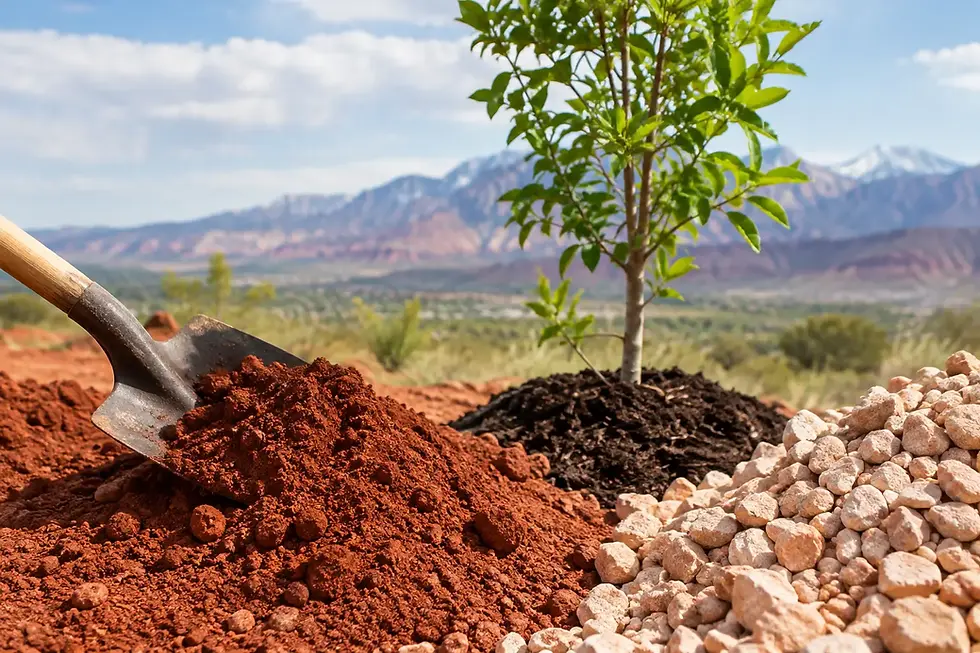
For garden beds and planting areas, a compost-rich soil blend gives plants organic matter where roots will actually grow. Fine wood compost is useful when an existing site has workable native soil but needs better structure and moisture retention. It can be incorporated into the top layer before planting rather than used as a decorative surface cover.
For new lawns, broad planting areas, and landscapes with poor native ground, a blended product such as Super Soil can make more sense. Super Soil combines wood compost, organics, and Ferrozite, an iron-rich amendment. It is built for the layer below the finished landscape - the layer that has to carry turf color and plant health after the installation crew is gone.
Ferrozite can also be selected as an amendment when iron support is the main need. The right choice depends on existing soil, irrigation water, planting plan, and whether the site needs a full growing medium or a targeted improvement. There is no miracle dirt. There is a material that fits the work.
How Much Soil Should You Order?
Bulk soil is generally sold by the cubic yard, so start with the area and planned depth. Multiply length by width to find square feet. Then multiply by the depth in feet and divide by 27 to estimate cubic yards. A 1,000-square-foot bed spread 3 inches deep needs about 9.3 cubic yards before allowing for uneven ground, settling, and final grading.
For many new garden beds, 3 to 4 inches of quality soil blend or compost incorporated into the upper soil layer is a practical starting point. Where crews are improving established beds, 1 to 2 inches may be enough if it is worked in rather than left as a thin layer on the surface. New lawn areas often need a more complete soil-preparation plan, especially where subsoil was compacted by construction.
Depth matters as much as volume. A half-inch of material spread across a large area may change color temporarily without meaningfully improving the rooting zone. On the other hand, adding too much material without adjusting grades can create drainage problems, bury hardscape edges, or leave turf above sidewalks and curbs.
Build a reasonable waste factor into the estimate. Low spots, rough grades, and material left in the pile all consume volume. Contractors should also account for material needed to blend into transitions around walks, curbs, tree rings, and existing turf. It is usually easier to have a controlled surplus for final grading than to stop a crew for a small second load.
Spread It, Then Work It In
Compost performs best when it becomes part of the root zone. For beds and broad landscape areas, spread the material evenly, then till or incorporate it into the upper 4 to 6 inches where site conditions allow. This helps improve soil structure throughout the layer where new roots need water and oxygen.
Avoid working wet soil. If soil forms slick clods, smears under equipment, or sticks heavily to boots and tines, wait for better conditions. Tilling wet ground can create dense layers that restrict roots later. Winter and early spring installation can be a smart move in Utah, but only when crews have workable access and the soil is not saturated or frozen solid.
For established trees and shrubs, stay aware of roots. Do not aggressively till inside a mature tree’s root zone. Use a lighter application around the area, keep material away from trunks, and use mulch where surface protection is needed.
Plan Garden Soil Delivery Before the Truck Leaves
A bulk delivery is part of the install, not an afterthought. Before ordering, identify the exact dump spot and confirm that the truck can safely reach it. The nearest spot is not always the best spot. A pile placed too close to a curb, gate, garage, or active work area can create more handling than it saves.
The driver needs clear access, firm ground, adequate overhead clearance, and a safe place to dump. Look for low branches, power lines, parked vehicles, narrow gates, soft shoulders, steep approaches, and newly installed curbing. If the material must cross a lawn, ask whether the route will support a loaded truck without damage, particularly during wet or thawing conditions.
On commercial sites, coordinate delivery around other trades. Soil piles compete for space with pallets, irrigation parts, concrete work, equipment, and dumpsters. Mark the drop area before the truck arrives and keep it clear. A short conversation with the superintendent can prevent a pile from landing in the path of paving, inspections, or utility work.
SuperSoil USA can deliver bulk materials to jobsites, with loads up to about 15 tons depending on the product and delivery requirements. Soil, compost, decorative rock, gravel, and road base are delivered separately. That matters when a project needs both soil preparation and finish materials. Plan the sequence so the soil crew can spread and incorporate growing media before decorative rock or mulch closes out the beds.
Time Delivery Around the Work, Not Just the Calendar
Winter is a useful soil-building season because plants are dormant and crews can prepare ground before spring schedules fill up. Incorporating compost before freeze-up, or during workable winter conditions, gives the site a head start. When heat returns, the landscape is not trying to establish roots in untouched, compacted ground.
This is especially valuable on commercial properties where spring failure becomes a callback. Thin turf, stressed shrubs, dry parking-lot islands, and poor color are often blamed on irrigation alone. Water matters, but soil that cannot hold moisture or support active roots creates the same problems again and again.
Timing still depends on access and weather. Heavy equipment on saturated soil can leave ruts and compaction that cancel out the benefits of the amendment. If a jobsite is soft, wait for conditions to firm up or choose a staging point that keeps trucks and loaders off sensitive areas. A well-timed delivery is better than a rushed delivery that damages the finished grade.
Match the Material to the Rest of the Site
Soil work rarely stands alone. A complete landscape may need screened or enhanced topsoil for grading, compost for root-zone improvement, mulch or wood chips for protection, and aggregate materials for pathways, driveways, or base preparation. Each material has a different job.
Fine wood compost helps improve the growing layer. Mulch helps reduce surface evaporation and moderates temperature after planting. Decorative rock provides a finished look but does not replace soil improvement beneath it. Road base and gravel build stable, functional surfaces, but they should stay separated from planting soils. Mixing the wrong material into the wrong zone creates expensive cleanup and weak results.
For vegetable gardens, keep the focus on a clean, workable planting mix and consistent irrigation. For turf, prioritize even grading and a prepared root zone before sod or seed goes down. For commercial beds, make compost part of the installation standard, not an optional add-on after plants show stress.
A Better Order Starts With a Short Site Check
Before placing an order, confirm the square footage, planned application depth, product needed, jobsite address, preferred delivery date, access route, and dump location. Know whether a crew and equipment will be ready to spread material when it arrives. If the answer is no, do not let a fresh pile become an obstacle for several days.
A supplier should be able to help translate the project into yards, tons, product type, and delivery logistics. For Utah jobsites, that practical planning is what turns bulk material into a landscape that performs through heat, wind, irrigation cycles, and winter.
If you are preparing beds, turf areas, tree wells, or a large-lot landscape, call SuperSoil USA at 435-896-5970 before the crew is on site. Get the soil right below the surface, and the finished landscape has a stronger chance to hold color, water, and plant health when the season gets hard.


Comments