.png)

Best Materials for Driveway Repair in Utah
A driveway rarely fails all at once. It starts with a low spot that holds spring runoff, loose gravel that migrates to the edges, or a pothole that gets deeper every time a vehicle passes over it. Choosing the best materials for driveway repair means looking below the visible damage. The right material has to compact well, shed water, and hold up through Utah freeze-thaw cycles, summer heat, trucks, trailers, and daily traffic.
For most gravel and unpaved driveways, road base is the workhorse material. But a dependable repair may also need larger aggregate, surface gravel, or a separator fabric beneath the base. The right combination depends on whether you are repairing a single pothole, reshaping a long rural driveway, or rebuilding a soft section that turns muddy after snowmelt.
Best Materials for Driveway Repair: Start With the Base
A driveway surface can only perform as well as the material underneath it. When the ground is soft, wet, or heavily rutted, adding a thin layer of loose gravel on top may make the driveway look better for a few days, but it will not solve the problem. Tires will push the new rock into the weak soil, and the rut will return.
Road base for compacted strength
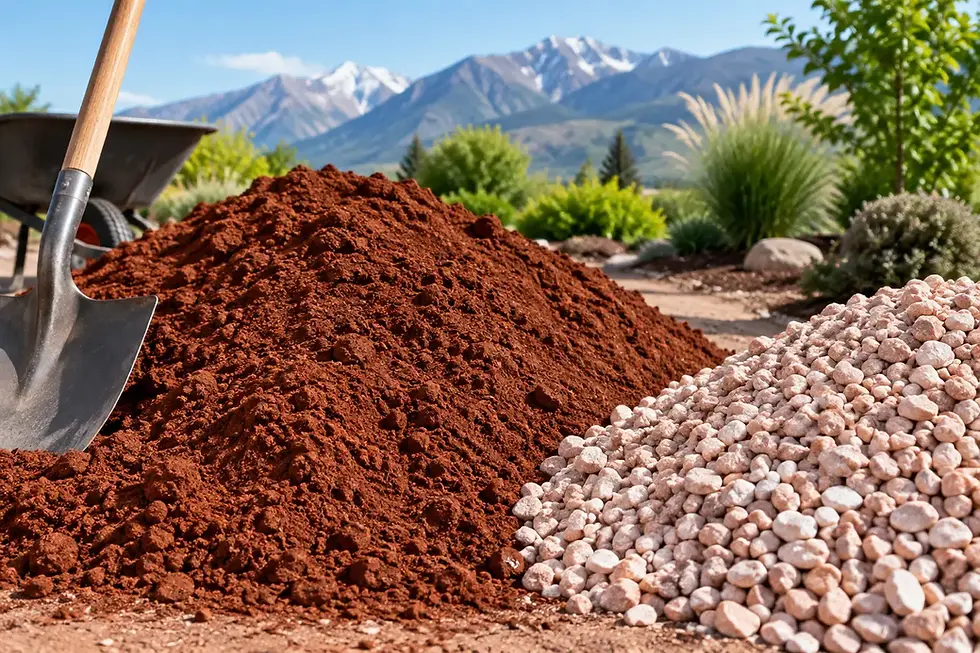
Road base is usually the best all-around choice for repairing and rebuilding a gravel driveway. It is a blended aggregate containing crushed rock in several sizes, including fines. Those smaller particles fill spaces between larger pieces, allowing the material to lock together when it is watered and compacted.
This dense, stable finish makes road base a strong option for:
Potholes and washboard areas
Low spots where water has weakened the driveway
New driveway foundations
High-traffic areas near garages, gates, barns, and parking pads
Rural driveways that need a durable, maintained surface
A 1-inch-minus road base is especially useful when you need a material that will grade smoothly while still carrying vehicle weight. Spread it in manageable lifts rather than dumping one deep layer over unstable ground. For smaller repairs, a few inches of compacted road base may be enough. For a driveway with serious base failure, excavation and a thicker rebuild are often the better long-term investment.
Larger crushed rock for soft ground
If the driveway has a section that pumps water, sinks under vehicles, or stays muddy, larger crushed rock may be needed below the road base. The larger stone creates a firmer bridging layer over weak soil and gives water more room to move away from the surface.
This is not typically the top layer drivers want to see or drive on every day. Its job is structural. Once the soft area has a stable rock foundation, road base can be added above it and compacted into a smoother finished surface.
The trade-off is cost and depth. Larger aggregate works well where conditions demand it, but it is unnecessary for a shallow pothole on otherwise solid ground. Digging out only the failed area and rebuilding it properly is often more effective than spreading material across the entire driveway.
Gravel for a Clean, Drivable Surface
Gravel is often used as the visible top course after the driveway base has been repaired. It can improve traction, reduce dust, and give the property a cleaner finished look. However, not all gravel behaves the same way under tires.
Angular crushed gravel generally stays in place better than rounded rock because its edges interlock. A properly sized gravel surface can provide a good driving experience, but it still needs a solid, compacted layer underneath. If it is placed directly over mud or loose dirt, it can disappear into the subgrade and become expensive to maintain.
For a long driveway, consider how the material will be used. A surface that sees passenger vehicles only may need less structural depth than one that handles deliveries, livestock trailers, RVs, farm equipment, or repeated construction traffic. Heavier traffic calls for a stronger base, not simply more surface gravel.
Why decorative rock is usually not the repair material
Decorative rock can look excellent around driveways, parking areas, flower beds, and landscape borders, but it is not usually the right choice for repairing the wheel path itself. Many decorative rocks are selected for color, shape, and curb appeal rather than compaction. Rounded stones can roll under tires, while larger decorative pieces do not create the dense, even surface that road base provides.
That does not mean decorative material has no role near a driveway. It can define edges, dress up a mailbox area, finish drainage swales, or create an attractive transition between the driveway and planting beds. Keep structural material where vehicles travel and use decorative rock where appearance is the priority.
Do Not Ignore Drainage
Water is the main reason many driveway repairs fail. Snowmelt and rain need a path off the driving surface. When water sits in a depression, it softens the soil beneath the rock. Traffic then forces the material downward and outward, creating potholes, ruts, and loose edges.
Before ordering material, look at where the water goes. A driveway should generally crown slightly in the center so water drains toward the sides, or it should be shaped with a consistent cross-slope toward a suitable drainage area. The goal is not to send water toward a home, garage, neighbor, or road. It is to move it safely away from the travel path.
A driveway with repeated washouts may need more than new aggregate. A shallow swale, ditch cleanup, culvert repair, or improved outlet can protect the material you place. If water crosses the driveway, address that flow before rebuilding the surface. Otherwise, even quality road base will be asked to do a job it cannot do alone.
A Practical Approach to Pothole Repair
For a shallow pothole on a stable gravel driveway, start by removing loose material, mud, and standing water. Square up the damaged spot if possible, then add road base slightly above the surrounding grade. Water it lightly and compact it with a plate compactor, roller, or repeated passes from a vehicle if the repair is small.
The mistake to avoid is filling a wet hole with loose gravel and leaving it high. Without compaction, the material will settle as soon as traffic returns. A properly compacted repair may need a second light application after a few days of driving, especially during wet weather.
For deeper potholes, dig down until you reach firm material. If the bottom is wet or soft, add larger crushed rock first, then cover it with road base. Build the repair in layers, compacting each layer before adding the next. This takes more effort than a quick top-off, but it helps stop the pothole from reopening.
When Geotextile Fabric Makes Sense
Geotextile fabric is a useful addition when a driveway is built over clay, fine soil, or consistently soft ground. Installed between the native soil and the aggregate, it helps separate the two layers. That keeps road base from mixing into the soil below and helps preserve the thickness of the driveway structure.
Fabric is most valuable for new builds, major rebuilds, and low-lying sections with recurring mud. It is not required for every simple gravel refresh, and it cannot correct drainage by itself. Still, when you are already excavating a failing section, adding a separator layer can reduce future material loss and maintenance.
How Much Material Should You Order?
Driveway material is usually sold by the cubic yard or by weight, so accurate measurements matter. Measure the length and width of the repair area, then decide on the compacted depth you need. A pothole repair may require only a few inches, while a new base often requires several inches of material over the full driveway area.
Remember that aggregate compacts. Ordering exactly the finished depth can leave you short after grading and compaction. It is also wise to allow for filling low spots, building a crown, and blending new material into the existing driveway. For large areas, delivery in bulk is usually more practical and cost-effective than trying to handle repair material in small bags.
SuperSoil USA can help property owners and contractors select bulk road base, gravel, and other practical materials for the job. For material availability, delivery planning, or help matching aggregate to your driveway conditions, call 435-896-5970.
A smooth driveway is not about making it look newly covered for one weekend. Start with firm material where the ground has failed, shape the surface so water can leave, and compact every layer well. That approach gives your repair a better chance of lasting through the next snowmelt, the next storm, and the next load of traffic.


Comments